
- The saved U.S. Department of State guidance says the passport name-change process varies by situation.
- For the supported later-change case, mail renewal may use Form DS-82.
- The same saved passage says an in-person application may use Form DS-11.
- The page data names the recent passport, a passport photo, and name-change documentation.
- Confirm the current route before sending a passport or personal evidence.
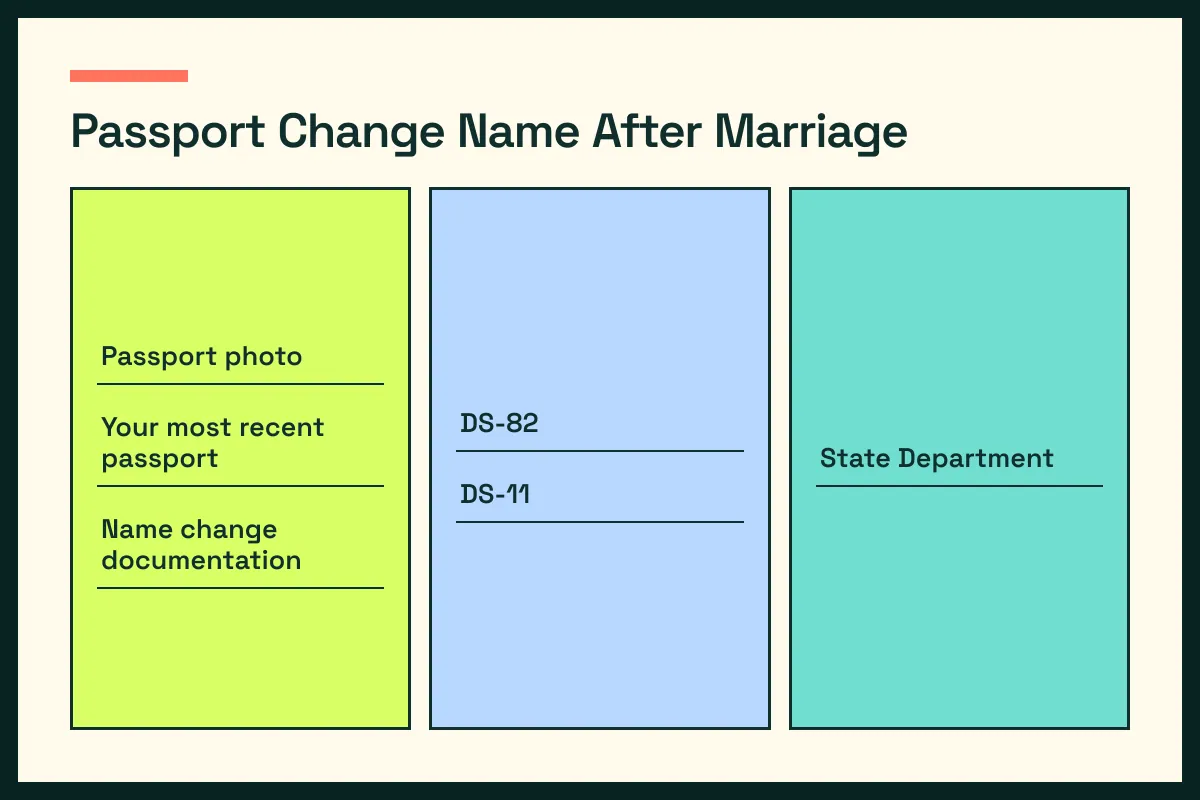
| Stage | Action | Evidence owner |
|---|---|---|
| Determine the case | Compare your situation with the official name-change guidance | U.S. Department of State |
| Mail possibility | Form DS-82 may apply in the supported later-change case | U.S. Department of State |
| In-person possibility | Form DS-11 may apply in the same saved passage | U.S. Department of State |
| Prepare evidence | Recent passport, passport photo, and name-change documentation | Saved page data |
passport change name after marriage
passport change name after marriage cost
passport change name after marriage uk
passport name change after marriage canada
passport name change after marriage india
A passport change name after marriage is not one interchangeable application. The saved U.S. Department of State guidance says the process varies depending on the applicant’s situation. It then supports two possible routes for the later-change case described in the project evidence: renewal by mail and an in-person application.
That conditional wording should remain visible throughout the task. A named form is useful only after the official guidance places your case on that route. Starting with a downloaded form and forcing your situation into it reverses the decision.
How do you identify the correct passport name-change situation?
Open the current name-change guidance and compare its case descriptions with your passport and legal-name event. The project evidence does not reproduce every case. It preserves a passage for a change occurring after the period described by the source, so other situations must be resolved on the official page.
Write down the facts needed to distinguish your case without placing private passport details in a shared note. The question is not simply whether a marriage happened. It is which official name-change path matches the passport and the legal event.
What does the saved source say about the mail route?
The documented passage says you may be eligible to renew by mail using Form DS-82 in the described later-change situation. “May be eligible” is a condition, not a guarantee. Check the live instruction before treating mail as available.
Use the current form supplied by the agency. Compare every name entry with the legal-name documentation and the recent passport. Before sending anything, verify where the official instruction directs the package and what the route currently requires. This article does not repeat an address because none is stored in the page data.
When can Form DS-11 appear?
The same saved passage says an applicant in the supported situation may apply in person using Form DS-11. It presents the in-person path alongside the possible mail renewal path. It does not say that both are equally suitable for every person.
Read the official distinctions, choose the route that matches them, and prepare only for that route. Mixing instructions from the two forms can create a packet that satisfies neither. If the page leaves your situation unclear, ask the U.S. Department of State before surrendering a passport or submitting sensitive evidence.
Which documents are present in the project data?
The structured page data names a passport photo, the most recent passport, and name-change documentation. Those are the supported preparation categories for this article. The list is not permission to ignore additional route-specific instructions shown on the current agency page.
Check each category against the route selected for your situation. A document can be relevant but still need to meet a current presentation rule. The project does not store those detailed standards, so it does not turn them into universal claims.
Keep the recent passport secure while planning. Record the task status separately from the document itself. A shared household checklist can say that the passport packet is being prepared without exposing a passport number or image.
How should you compare the two supported paths?
Compare mail and in-person processing only through the current official guidance. The saved evidence names the forms and channels, but it does not provide a fee, completion time, appointment rule, or acceptance promise.
The useful comparison is procedural. The mail possibility centers on Form DS-82. The in-person possibility centers on Form DS-11. Both depend on the case description that leads to them. If the live source changes, follow it.
What can you do after a rejected or incomplete application?
Use the agency’s response as the starting document. Identify whether it concerns the chosen route, the application, the recent passport, the photo, or name-change documentation. Then compare that point with the current instruction for the selected form.
Do not switch forms merely because the first route had a problem. A refusal can identify a missing or mismatched requirement without changing the underlying case. Ask the U.S. Department of State which correction applies and keep its answer with the application record.
If the response describes a situation not covered by this page, stop using the summary as a decision tool. The official source is the authority for exceptions and individual cases.
How should you coordinate travel and other name updates?
Treat the passport record as its own task. This article does not claim when a traveler must book, which name a carrier will accept, or how another country treats a marriage name change. Those facts are outside the saved data.
Keep the name used for the application consistent within the passport task. For employer, bank, voter, license, and subscription records, open separate instructions. A passport outcome does not automatically update those systems.
What should you keep when the task is finished?
Retain the agency outcome and a short note identifying the route used. Store the passport and personal evidence securely. Remove redundant working copies from shared locations.
The value of the record is continuity. If another organization asks which identity record now carries the legal name, you can answer from the completed task without reconstructing the application from memory.