
First-year marriage advice is most useful when it turns a broad conversation into a decision the couple can revisit. Marriage does not automatically merge credit files, bank habits, insurance choices, beneficiaries, or household routines. Each system has its own owner, evidence, and consequences.
Which conversations belong in the first year?
Start with the systems that affect both spouses even when only one name appears on the account. Discuss income visibility, regular bills, debt obligations, saving priorities, insurance access, emergency contacts, and the records each person would need if the other were unavailable.
Then discuss the home itself. Two households may bring duplicate items, incompatible routines, different standards for tidiness, and different expectations around guests or family. Treat those differences as design choices. Assign recurring work clearly and revise the arrangement when it creates resentment or confusion.
How should couples use financial and legal guides?
Use them to prepare questions, compare options, and identify the organization that controls the decision. Do not use a general guide as a substitute for plan documents, tax advice, legal advice, or a provider’s current instructions.
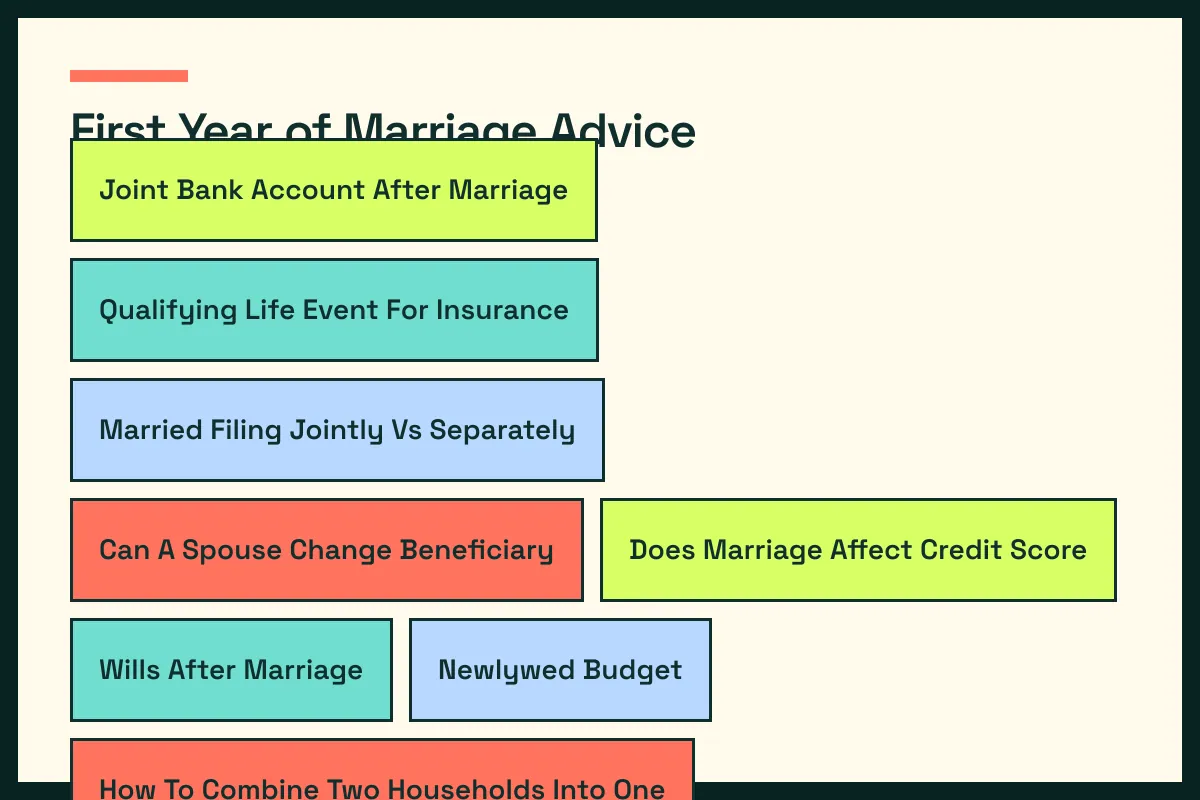
The banking guide compares joint, separate, and mixed structures without declaring one model correct. The tax guide helps readers organize the questions behind filing choices. The insurance guide identifies the information to gather after marriage. Credit, beneficiaries, wills, and estate documents are handled as separate topics because one update does not automatically change the others.
Every guide includes a disclaimer and a source box. When source data does not support a deadline, price, or personal recommendation, the article does not supply one from memory.
What makes a shared plan durable?
Both spouses should be able to explain it. A system managed by one person can still be shared, but the other person needs enough access and context to act if circumstances change. Keep account ownership, login recovery, important contacts, and document locations understandable without exposing sensitive information unnecessarily.
Set a way to revisit decisions. A new job, move, health change, family obligation, or shift in income can make an earlier arrangement less useful. Revisiting the plan is maintenance, not evidence that the first decision failed.
Where should you begin?
Choose the guide that matches the decision already causing friction or delay. Read the answer-first block, use the checklist to gather information, compare the options, and take unresolved questions to the appropriate provider or qualified professional.
The complete guide set appears below. It covers joint or separate banking, health coverage after marriage, filing status questions, beneficiary reviews, credit, wills and basic estate records, a first-year budget, and merging households.