
Good wedding thank-you card wording is specific enough to sound remembered and simple enough to send. The note does not need a performance. It needs the person’s name, the gift or support you are acknowledging, one detail that belongs to the situation, and a closing that sounds like the couple.
What belongs in a wedding thank-you note?
Start with the person rather than the object. Thank them for the gift, contribution, travel, work, or support. Add a concrete connection: how the gift will be used, what their presence meant, which part of their help relieved pressure, or what you appreciated about their work.
Write from the couple when the thanks comes from both spouses. If only one person has the relationship or memory behind the note, that spouse can lead the wording while still acknowledging the couple. Avoid assigning every note to one spouse simply because that person writes more easily.
How do the situation guides differ?
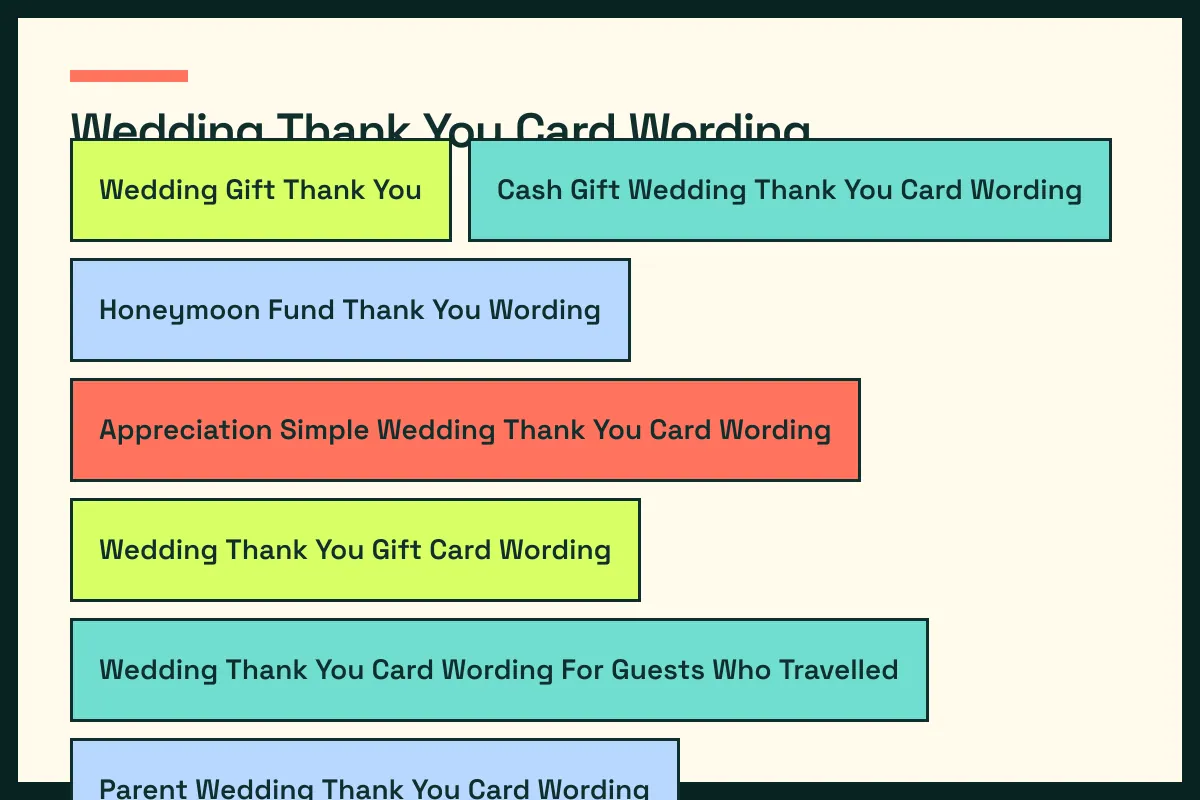
A cash-gift note should express gratitude without grading the amount. A honeymoon-fund note can connect the contribution to the experience without turning the card into a spending report. A group-gift note should recognize the group while adding personal lines when individual relationships call for them.
Travel deserves recognition even when a guest brought no gift. Parents and in-laws may need thanks for emotional, practical, or financial support, but the message should name what actually happened rather than relying on a ceremonial phrase. Wedding-party and vendor notes work best when they refer to a specific moment, task, or quality of care.
Gift-card wording can mention the choice or use without sounding transactional. A delayed note should acknowledge the delay briefly, then spend more space on gratitude than apology.
What should stay out of the card?
Do not compare gifts, mention what someone else gave, or imply that a contribution was too small. Avoid jokes that can read as criticism once they are separated from the conversation that inspired them. Do not invent a future use for a gift merely to make the message sound detailed.
Skip formal phrases you would never say aloud. Warmth comes from recognition, not decoration. One true sentence about the person is better than a paragraph that could be sent to anyone.
How can a couple finish the notes?
Work from a verified recipient list. Pair each name with the relevant gift or action and one memory. Draft by situation, then personalize each message before addressing the card. Mark the note complete only after it has been sent, not when the first draft exists.
The guides below contain tone-based wording options and situation templates. Use them as scaffolding. Replace generic details with the actual person, gift, help, or memory before sending.